

What is Livestock Fans
Livestock fans are indispensable tools for modern livestock management, ensuring optimal conditions for animal welfare and productivity. In today’s agricultural practices, prioritizing the well-being of livestock is essential for sustainable farming. These fans play a crucial role in maintaining a conducive environment within barns, contributing significantly to the comfort and performance of farm animals.
Benefits of Livestock Fans
Heat Stress Prevention in Livestock
Heat stress is a significant concern for livestock, especially in hot and humid climates. Industrial outdoor fans help prevent heat stress. The gentle breeze produced by livestock fans facilitates the evaporation of moisture from the animals' skin, allowing them to dissipate excess heat and maintain a comfortable body temperature.
Reduction of Humidity and Condensation
Excessive humidity levels and condensation lead to unfavorable conditions in livestock barns, promoting the growth of mold, mildew, and bacteria. This poses a risk to animals and farm workers. Livestock fans assist in controlling moisture levels by promoting air movement and aiding in the evaporation of excess moisture. This helps to reduce humidity, preventing the accumulation of moisture and the subsequent growth of harmful microorganisms.
Lesser operational noise
Loud noises can be extremely upsetting to cows. And when they're stressed out, it can affect the amount of milk they produce. Choosing quieter livestock fans can create a peaceful and productive environment. A livestock fan is your best option if you're looking for noise-free ventilation.
Enhanced Air Quality in Barns
Livestock barns are prone to poor air quality due to the accumulation of dust, gases, and odors. Livestock ans effectively combat this issue by creating a constant flow of air that helps to remove airborne contaminants. The gentle breeze generated by livestock fans facilitates the dispersion and dilution of dust particles, reducing their concentration in the air and minimizing the risk of respiratory problems for both animals and humans.
Increased Productivity and Performance
The optimal ventilation and comfort provided by livestock fans positively impact livestock productivity and performance. By maintaining a consistent and comfortable environment, livestock fans help to reduce stress among animals. This, in turn, promotes better feed intake, improved growth rates and enhanced overall productivity.
Energy Efficiency and Cost Savings
Livestock fans are designed with energy efficiency in mind. They consume significantly less energy than traditional high-speed barn fans or air conditioning systems. The low rotational speed of livestock fans results in lower power consumption while still providing effective air movement and circulation.
Why Choose Us
Our Certificates
Our motor quality is at the forefront of the industry and we have certifications such as IS09001, CE, EMC and so on.
Product Application
These products are suitable for various applications such as factories, warehouses, logistics centers, gyms, sports centers, shopping malls, food courts, barns, livestock barns, stables, and other open or high spaces in industrial and commercial sites.
Production Equipment
We use several types of production equipment, including wire-winding machines, drying cabinets, insulation withstand voltage testers, CMMs, dynamic balancing machines, motor comprehensive testers, and pneumatic presses.
Production Market
Our market extends across China, Europe, the Middle East, Asia, and South America. Each year, we sell around 12,000 sets of HVLS fans and 15,000 sets of PMSM motors.
Types of Livestock Fans
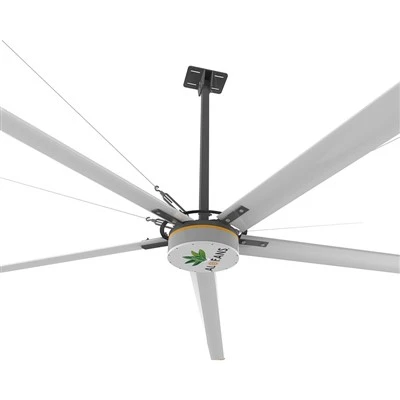
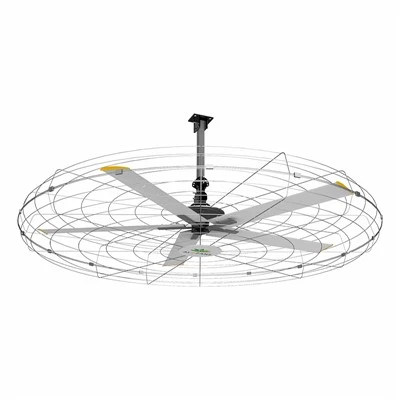
Livestock HVLS Ceiling Fans
Many farms have high-volume, livestock HVLS ceiling fans installed in their compost-bedded pack barns, and they appear to perform effectively. When installing fans, ensure adequate clearance underneath for tillage equipment to work at maximum pack depth and that the fan blades have bumper guards if close to the barn trusses. Additionally, livestock HVLS ceiling fans aid in dissipating unpleasant odors and gases, providing a more pleasant and healthier working environment for farm workers.
Livestock Wall Fans
Livestock wall fans assist in controlling moisture levels by promoting air movement and aiding in the evaporation of excess moisture. This helps to reduce humidity, preventing the accumulation of moisture and the subsequent growth of harmful microorganisms. By maintaining appropriate humidity levels, livestock wall fans create a healthier and more hygienic environment. Livestock wall fans are also fit for agricultural site, they mainly increase animal comfort and productivity,mitigate the spread of disease and combat unpleasant odors and pests.
Dairy farm
Livestock fans can usually be used in dairy farms, they can dry the ground, accelerate air circulation, improve air quality, and reduce the heat stress of dairy cows. Using livestock fans helps to maintain a comfortable environment, which in turn improves milk production and increases the health and longevity of the cows, and for business owners installing an livestock fan is an investment that not only improves the environment but also increases the long-term benefits to the business owner.
Poultry house
Livestock fan is beneficial to control the temperature and humidity level of the poultry house, which can effectively increase the survival rate of poultry, and can reduce the heat stress of chickens, accelerating air circulation and reducing the risk of respiratory diseases in poultry caused by poor air quality.
Pig sheds
Pigs can also greatly benefit from livestock fans, especially in hot and humid environments where there are many flies in the house in summer, and can produce an unpleasant smell. Turn on the livestock fans, which can effectively promote airflow, help pigs dissipate heat and reduce the risk of heat stress, and can improve air quality, and control unpleasant odors.
Stables
Livestock fans are highly effective in stables, providing a comfortable and well-ventilated environment for horses. They help prevent air stagnation, as well as moisture and odor buildup, creating a drier, more comfortable, and healthier space for the animals.
Livestock auction and exhibition facilities
Livestock fans can be used in livestock auction and exhibition facilities to improve air circulation, creating a more comfortable and cleaner environment for animals and attendees, while reducing heat stress, as well as controlling odors and increasing the comfort of the space.
To support natural ventilation through barn design and surroundings, it is important to consider livestock HVLS fans size, number, and placement. These three factors can vary depending on the building’s total air volume, shape, building material, and use.
For example, consider a 120 foot by 60 foot barn with ten horses. In general, an 8ft livestock HVLS fans can cover approximately 30 radius feet. So, in this space, two 8 feet livestock HVLS fans spaced 60 feet apart and 12 feet from the wall might produce the best airflow. However, a smaller barn might work more efficiently with one livestock HVLS fans with a larger diameter.
The placement of fans is also crucial. In addition to needing enough space from other fans and walls, it is necessary to note ground obstructions. Large pieces of stationary equipment and other obstacles can reduce the airflow. Depending on the obstructions and number, livestock HVLS fans will need to be either centered above the object or spaced between the objects.
Ultimately, because every barn design is different, it is best to consult an livestock HVLS fans manufacturer and installer for the best size, number, and placement recommendations.


Running the livestock fans in forward or reverse, changes the air. When running forward, it generates a column of air that is the same size as the fan diameter. The 20 ft fans emits a 360-degree wave of air out about 4 feet high. The air travels over the animals, cooling them. We build the fans up to 30 feet in diameter.
Reversing livestock fans forces air upward during cold weather. Recommends maintaining a 20% reverse speed to fix winter condensation. This will destratify any heat that is stacked along the ceiling It makes for less dripping. Gently air circulation works wonders in the winter. Reversing is easy with the variable-speed control. Using a natural ventilation system in reverse moves air over the sidewall curtain fabric. This reduces the risk of barn moisture during cold weather.
Factors to Consider When Selecting Livestock Fans
Fan Size and Capacity
Selecting the right livestock fans size and capacity is fundamental in ensuring proper ventilation within the dairy barn. The size of the barn, the number of dairy cattle housed within, and the layout of the space all influence the choice of fan size. Calculating the required airflow per cow or per square footage of the barn helps determine the fan capacity needed. A general rule of thumb is to aim for 1,000 to 1,500 cubic feet per minute (CFM) per cow to maintain adequate ventilation. Larger barns might require multiple fans or larger-capacity fans to ensure proper air circulation.
Fan Type and Design
There’s a variety of livestock fans types and designs available for dairy barns, each with its own set of advantages and limitations. Ceiling Fans: These fans are commonly installed overhead and provide consistent airflow throughout the barn. They are efficient in circulating air evenly, making them suitable for larger barns. They work well in combination with other fans to maintain air quality. The choice of livestock fans type largely depends on the barn’s layout, the number of cattle, and specific ventilation needs.
Efficiency and Energy Consumption
Opting for energy-efficient livestock fans not only reduces operational costs but also lessens the environmental impact. Energy-efficient models might have a higher initial cost but can result in significant savings over time. Look for fans with high Energy Star ratings or those certified by relevant energy efficiency standards. These fans typically consume less electricity while delivering adequate airflow.
Durability and Maintenance
The durability and ease of maintenance of livestock fans significantly impact their longevity and effectiveness in a dairy farm environment. Fans constructed with durable materials such as galvanized steel or corrosion-resistant components tend to withstand harsh barn conditions better. Ensure the fan materials can endure exposure to moisture, dust, and varying temperatures. Opt for fans with straightforward maintenance needs.
Noise Levels and Animal Comfort
Excessive noise from fans can stress dairy cattle, negatively impacting their health and milk production. Look for livestock fans equipped with noise-reducing features or consider installing sound barriers to minimize noise levels. Positioning fans strategically or using insulated materials can also help mitigate noise. Reduced noise levels contribute to a less stressful environment for dairy cattle, promoting their well-being, comfort, and ultimately, productivity.
How to Maintain Livestock Fans
Mounting hardware includes bolts, plates, nuts and other components that hold an livestock fans in place. Make sure that none of these parts have loosened or show any types of cracks or damage.
Guy wires are often used to give a fan stability and ensure it stays in place, even in extraordinary situations like earthquakes and wind storms. Properly installed guy wires should be taut and not have any frays or loose areas. Ensure that no part of the guy wire is wrapped around or in contact with any sharp edge. Not every fan will have guy wires to check, it depends on the specific livestock fan mounting system in place.
Safety cables provide a failsafe in case something happens that causes the livestock fans mounting equipment to fail. A safety cable will either be wrapped around the building structure and the fan's frame or come out of the top of the fan and wrap around the building structure. Check your safety cable for any tears or signs of looseness or weakness.
It can be easy to neglect cleaning your livestock fans. This is because they are far out of reach. Plus, they can function normally even with a heavy layer of dirt covering them. Depending on the environment there may be an excessive amount of dust or manufacturing debris on or around the fan which could affect its ability to function properly. However, in this situation it would be prudent to clean off any excess dirt off the fan and the blades. High-end livestock fans use anodized blades to prevent damage or staining from dirt or moisture and do not require frequent cleaning. However, like any machine with moving parts, it’s best not to get too much dirt between those parts.
Certificate


FAQ
As one of the leading livestock fans manufacturers and suppliers in China, we warmly welcome you to wholesale cheap livestock fans from our factory. All our products are with high quality and competitive price. Contact us for quotation.
BARN FANS, Big Ceiling Fans, Livestock Wall Fans